

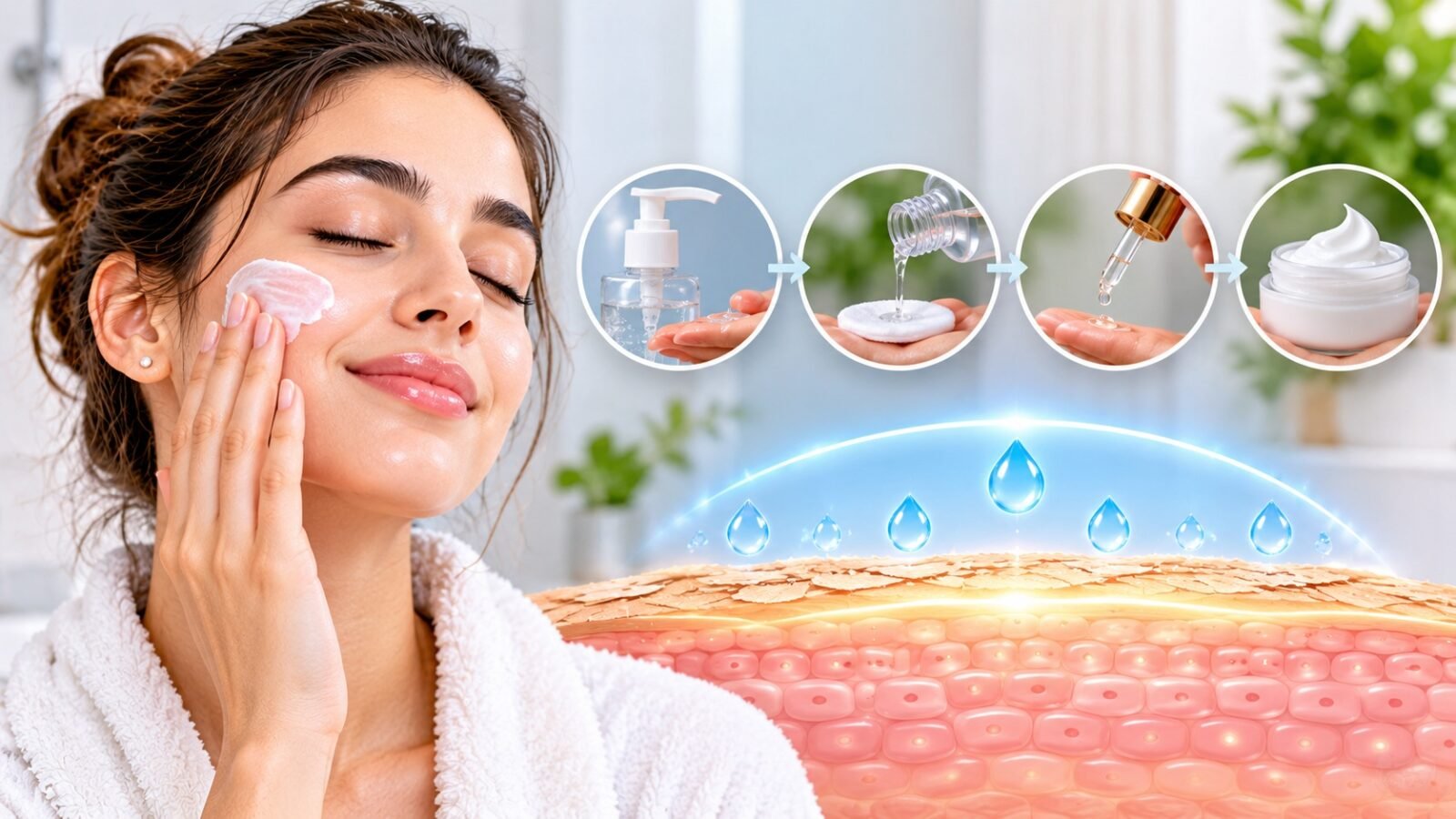
If your skin suddenly stings when you apply basic moisturizer, looks shiny yet feels tight, or has broken out in tiny red bumps out of nowhere, you likely don’t need stronger actives—you need a skin barrier repair routine.
In the age of 10-step routines, daily glycolic acid toners, high-percentage retinoids, and harsh physical scrubs, over-exfoliation has become one of the leading causes of acquired skin sensitivity. Fortunately, your skin is remarkably resilient. By stripping your regimen back to four targeted, soothing steps, you can calm inflammation and rebuild your lipid barrier in as little as 2 to 4 weeks.
Signs You Have a Damaged Skin Barrier
Before jumping into how to fix over-exfoliated skin, confirm that your moisture barrier (the stratum corneum) is compromised. Common damaged skin barrier symptoms include:
- Stinging or burning when applying gentle, non-active products like water or plain lotion
- Persistent redness, blotchiness, or flushing
- Tight, dehydrated texture paired with an unusual “waxy” or overly shiny surface
- Flaking, peeling, or rough patches around the nose, chin, and cheeks
- Sudden breakouts or bumpy texture caused by increased transepidermal water loss (TEWL) and micro-inflammation
Step 1: Switch to a Non-Stripping, pH-Balanced Cleanser
Goal: Remove dirt and sunscreen without dissolving your remaining natural lipids.
When your barrier is compromised, foaming cleansers packed with sulfates (like SLS) or high-pH soaps act like dish detergent on already fragile skin. Your cleanser should leave your skin feeling soft and cushioned—never “squeaky clean.”
- What to Look For: Creamy, milky, or hydrating gel cleansers formulated at a skin-friendly pH (around 4.5 to 5.5) with glycerin, colloidal oatmeal, or amino acid surfactants.
- Pro Tip: Skip morning cleansing altogether if your skin feels extra raw—simply rinse with lukewarm water (never hot) and pat dry with a clean, soft towel.
Step 2: Replenish Water with a Soothing Hydrating Serum
Goal: Flood dehydrated skin cells with humectants and calm visible redness.
A damaged barrier leaks water rapidly. Before sealing your skin with heavy creams, apply a lightweight, fragrance-free hydrating serum onto slightly damp skin to pull moisture deep into the epidermis.
- Best Ingredients for Skin Barrier Repair (Hydration Phase):
- Panthenol (Vitamin B5): Deeply hydrates while accelerating wound healing and calming irritation.
- Centella Asiatica (Cica) / Madecassoside: Reduces redness and soothes sensitized nerve endings.
- Beta-Glucan & Hyaluronic Acid: Bind water to the skin without stinging.
- What to Avoid: Skip Vitamin C (L-ascorbic acid), niacinamide concentrations above 5% (which can tingle on raw skin), and essential oils.
Step 3: Rebuild Lipids with a Ceramide-Rich Barrier Cream
Goal: Patch the microscopic cracks in your skin barrier and lock moisture in.
Think of your skin cells as bricks and your natural lipids as the mortar holding them together. Over-exfoliation strips away that mortar. To repair it, look for moisturizers formulated with the golden ratio of skin-identical lipids: ceramides, cholesterol, and free fatty acids.
- Key Ingredients to Prioritize:
- Ceramides (NP, AP, EOP): Restore structural integrity and prevent moisture loss.
- Squalane & Shea Butter: Mimic natural sebum to soften rough, flaky patches.
- Colloidal Oatmeal or Allantoin: Provide immediate relief from itching and tightness.
- PM Slug Option: At night, if your skin is severely cracked or peeling (and not acne-prone), tap a thin layer of plain petrolatum or a zinc-rich barrier balm (like cicaplast) over your moisturizer on dry spots to seal everything in overnight.
Step 4: Protect Daily with a Gentle Mineral Sunscreen (AM Only)
Goal: Shield vulnerable, healing skin from UV-induced inflammation.
Unprotected UV exposure generates free radicals that directly break down newly formed barrier lipids and prolong redness. However, certain chemical UV filters can sting sensitized skin.
- What to Choose: A broad-spectrum SPF 30 to SPF 50 mineral sunscreen powered by zinc oxide (or titanium dioxide). Bonus: zinc oxide is naturally anti-inflammatory and actively helps soothe irritated skin while protecting it.
Quick Reference: What to Pause vs. What to Keep
| Pause for 2–4 Weeks (The Culprits) | Keep in Your Sensitive Skin Routine (The Healers) |
| AHAs (Glycolic, Lactic, Mandelic Acid) | Ceramides, Cholesterol & Fatty Acids |
| BHAs (Salicylic Acid) & PHAs | Panthenol (Vitamin B5) & Glycerin |
| Retinoids (Retinol, Tretinoin, Adapalene) | Centella Asiatica (Cica) & Colloidal Oatmeal |
| Physical Scrubs, Cleansing Brushes & Clay Masks | Squalane & Shea Butter |
| Fragrance, Essential Oils & Denatured Alcohol | Zinc Oxide Mineral Sunscreen |
Frequently Asked Questions About Skin Barrier Repair
How long does it take to fix an over-exfoliated skin barrier?
Mild over-exfoliation typically calms down within 3 to 7 days of stopping actives. Moderate to severe barrier damage—where skin is actively peeling, stinging, or breaking out—usually takes 2 to 4 weeks (one full skin cell turnover cycle) to fully recover.
Can I still wear makeup while repairing my skin barrier?
Yes, provided it doesn’t irritate your skin or require harsh scrubbing to remove. Opt for creamy, hydrating formulas over matte powders, and remove makeup gently at night using a fragrance-free micellar water or cleansing balm followed by your gentle cleanser.
When can I reintroduce retinol or exfoliating acids?
Wait until your skin goes at least 7 consecutive days with zero stinging, redness, or tightness. When you do reintroduce actives, start with one product at a time, apply it just once or twice a week over moisturizer (“buffering”), and avoid layering multiple acids in the same routine.