

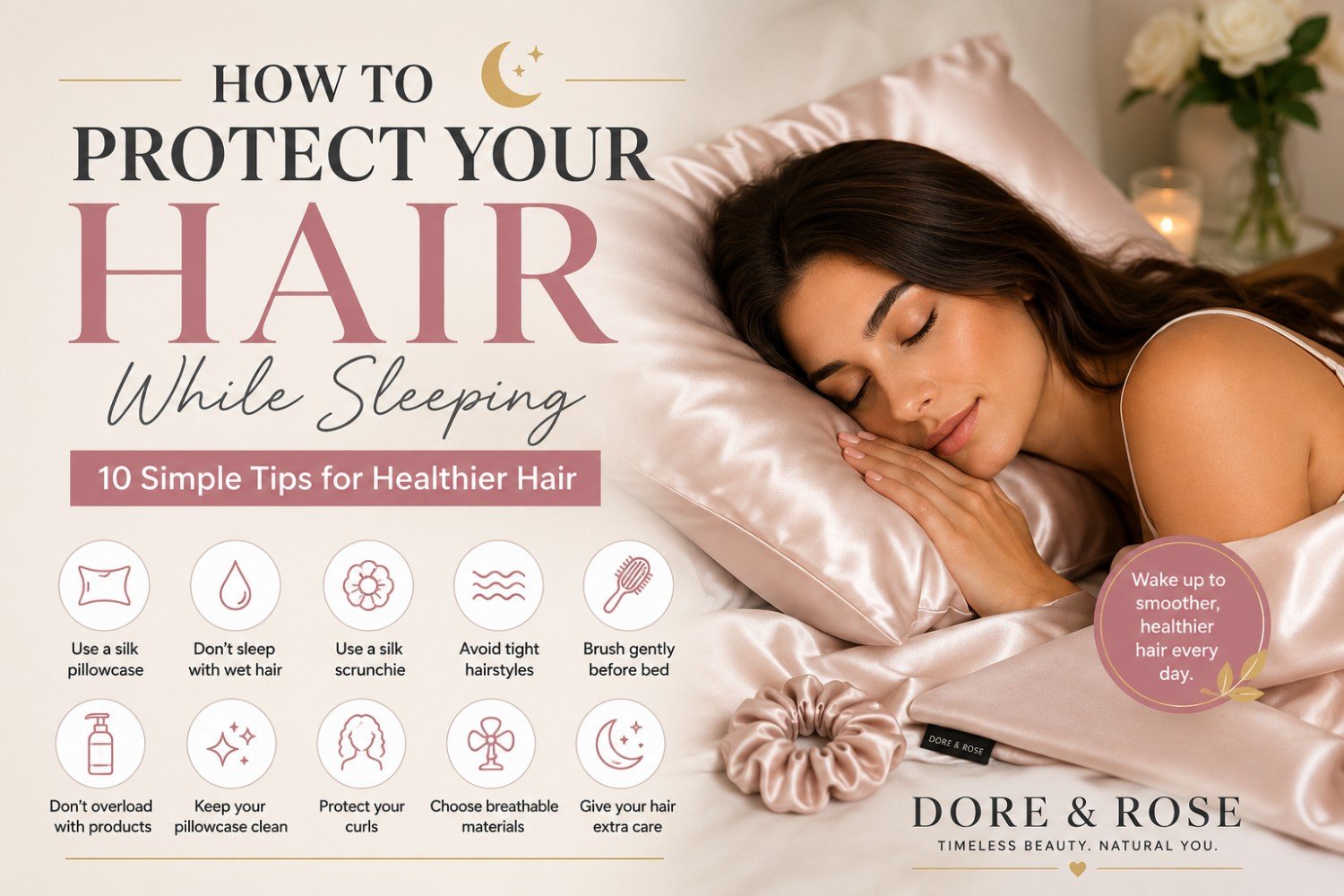
Want to wake up with smoother, healthier-looking hair? Your nighttime routine can make a bigger difference than you might think. While you sleep, your hair is constantly in contact with your pillow, and friction, moisture loss and tangles can all contribute to a bad hair day.
Fortunately, a few simple changes can help protect your hair while you sleep. From choosing the right pillowcase to tying your hair correctly, these tips can help you wake up with hair that feels smoother and is easier to manage.
In this blog, we explain how to protect your hair while sleeping and why your choice of pillowcase can make such a difference.
Why does your hair need protection while you sleep?
We spend many hours sleeping, which means our hair can remain in contact with our pillow for a long time. As you move around during the night, your hair rubs against the pillowcase. This constant friction can contribute to tangles, frizz and hair breakage.
A rougher fabric can create more friction, while a smoother fabric allows the hair to glide more easily over the surface.
Your sleeping position, hairstyle and even whether your hair is wet or dry before bedtime can also influence how your hair looks and feels the next morning.
Therefore, a good nighttime hair routine is not only about what products you put in your hair. It is also about how you treat your hair while sleeping.
10 ways to protect your hair while sleeping
1. Choose a smooth pillowcase
One of the easiest ways to improve your nighttime hair routine is to choose a pillowcase with a smooth and supple surface.
Cotton pillowcases can create more friction as you move your head during sleep. A smoother pillowcase allows your hair to move more easily across the fabric.
This can help reduce the amount of pulling and rubbing your hair experiences during the night.
A silk pillowcase is therefore a popular choice for people who want to keep their hair looking smooth and manageable.
2. Sleep on a silk pillowcase
Silk is a naturally smooth and soft fabric that allows hair to glide over the pillowcase instead of constantly rubbing against a rough surface.
A 100% mulberry silk pillowcase can be particularly appealing for a nighttime beauty routine because silk is soft, moisture resistant and temperature regulating.
It can also help reduce the static and friction that may contribute to frizzy-looking hair.
If you often wake up with tangled or messy hair, switching your pillowcase can be a simple change worth trying.
3. Never go to bed with soaking wet hair
Wet hair is more vulnerable to damage than dry hair. Going to bed with soaking wet hair can also leave you waking up with tangled, flattened or difficult-to-style hair.
If you wash your hair in the evening, allow it to dry properly before going to bed.
You don’t necessarily need to completely dry your hair with intense heat. Give it enough time to air dry or use a gentle drying method before getting into bed.
This simple habit can make your morning hair routine much easier.
4. Avoid tight hairstyles
A tight ponytail or bun may look convenient when you’re going to sleep, but keeping your hair pulled tightly for hours isn’t ideal.
Instead, choose a loose hairstyle that doesn’t put unnecessary tension on your hair.
A loose braid can be a good option for keeping longer hair together while reducing the amount of movement and tangling during the night.
The important thing is not to tie the hair too tightly.
5. Use a silk scrunchie
If you prefer to tie your hair before going to bed, consider replacing a traditional elastic with a silk scrunchie.
Traditional hair ties can pull on the hair and leave visible marks. A soft silk scrunchie provides a gentler way to hold the hair together.
It can also complement your silk pillowcase and make your nighttime hair routine feel a little more luxurious.
6. Brush your hair gently before bed
Taking a few minutes to gently brush your hair before sleeping can help prevent unnecessary tangles.
Start at the ends and gradually work your way upwards rather than pulling a brush from the roots all the way down.
This is especially useful if you have long, thick or easily tangled hair.
Don’t brush aggressively. The goal is simply to remove existing tangles and leave your hair in a manageable condition before you go to sleep.
7. Don’t overload your hair with products
A nighttime hair routine doesn’t need to involve dozens of products.
Using too many heavy products can leave your hair feeling greasy or weighed down by morning. Instead, choose products according to what your hair actually needs.
If your hair is dry, you might prefer a small amount of a suitable leave-in product or hair oil. If your hair becomes oily quickly, keeping your nighttime routine lighter may be more comfortable.
The key is less is often more.
8. Keep your pillowcase clean
Your pillowcase comes into contact with your hair and skin every night, so keeping it clean is an important part of your beauty routine.
Hair products, natural oils, sweat and dust can build up on the fabric over time.
Regular washing helps keep your pillowcase fresh and clean.
Always follow the washing instructions for the specific fabric. Delicate materials such as silk may require more careful washing than standard cotton pillowcases.
9. Protect your curls while sleeping
Curly and textured hair can be particularly prone to dryness, tangles and frizz.
If you have curls, try to avoid sleeping with your hair completely loose if that causes excessive friction and tangling.
A loose hairstyle, such as a loose bun or braid, can help keep your hair together.
A smooth pillowcase can also help reduce friction between your curls and the pillow.
The goal is to preserve your natural hair pattern while minimizing unnecessary rubbing.
10. Give your hair a little extra care at night
Your nighttime routine is a good opportunity to give your hair some extra attention.
Before going to bed, gently detangle your hair, apply any suitable hair-care product and choose a loose hairstyle if necessary.
Then let your pillowcase do some of the work.
A soft and smooth pillowcase can help create a more hair-friendly sleeping environment, especially when combined with good nighttime habits.
What is the best pillowcase for your hair?
There are several materials available when choosing a pillowcase, including cotton, satin, bamboo and silk.
Each has different characteristics.
Cotton
Cotton is one of the most common pillowcase materials. It is comfortable and widely available, but its texture can create more friction against the hair.
If your main concern is frizz, tangles and hair breakage, you may prefer a smoother alternative.
Satin
Satin has a smooth and shiny appearance and can provide less friction than many traditional fabrics.
However, satin is a weaving technique rather than a specific material. Satin can therefore be made using different fibres, including polyester and silk.
The actual fibre used is important when comparing different satin pillowcases.
Bamboo
Bamboo pillowcases are soft, breathable and can feel cool while sleeping.
They can be a good choice if you tend to get hot at night. However, if your priority is creating an especially smooth surface for your hair, silk remains a popular choice.
Silk
Silk is a naturally smooth and supple fibre and is particularly popular in the beauty world.
A 100% mulberry silk pillowcase provides a luxurious sleeping surface while allowing your hair to glide over the fabric.
Silk is also naturally temperature regulating and moisture resistant, making it a comfortable choice throughout the night.
Why choose a silk pillowcase for your hair?
A silk pillowcase can become an important part of your nighttime beauty routine.
The smooth surface means there is less friction between your hair and the pillowcase. This can help reduce the conditions that contribute to tangles, static and frizz.
Silk also doesn’t have the same absorbent characteristics as many traditional fabrics, so it can help your hair retain more of its natural moisture and the benefits of suitable hair products.
For people with dry, curly or frizz-prone hair, this can be particularly appealing.
And, of course, there is something wonderfully luxurious about going to bed on a soft silk pillowcase every night.
Silk pillowcase and hair: is it worth it?
If you regularly wake up with frizzy, tangled or messy hair, changing your pillowcase is one of the easiest things you can try.
A silk pillowcase won’t magically repair damaged hair overnight, but it can help create a gentler environment for your hair while you sleep.
Combine it with a loose hairstyle, gentle brushing and a good hair-care routine, and you have a simple nighttime routine designed to help keep your hair looking smoother and more manageable.
Final tips for healthier-looking hair while sleeping
To make your nighttime hair routine as hair-friendly as possible:
- Choose a smooth pillowcase;
- Consider sleeping on 100% mulberry silk;
- Avoid going to bed with soaking wet hair;
- Don’t tie your hair too tightly;
- Use a soft silk scrunchie if you need to tie your hair;
- Gently brush and detangle before sleeping;
- Keep your pillowcase clean;
- Give curly and textured hair extra care;
- Avoid using too many heavy products;
- Create a simple routine that works for your hair type.
A few small changes can make your nighttime routine much more comfortable for your hair.
Tip: Complete your nighttime beauty routine with a premium silk scrunchie for a soft and gentle hold. You can also discover Dore & Rose’s collection of 100% mulberry silk pillowcases and silk sleep accessories designed to bring a touch of luxury to your beauty sleep.